The CaRdS We Were Dealt
Written by Macy Motril and Mariasha Sumawang
From the glow of our computer screens, we stare back at a reality that is contrastingly dim: 0 units enlisted. Panicked eyes begin turning to classes with names that are more niche than normal, or timeslots that coincide with sunrises and sunsets.On the outside, it can look like students from the University of the Philippines Diliman move through the semester with carefully arranged schedules, as if everything falls into place by design. But for those living it, schedules are shaped by classes with limited slots and the realities that rarely follow a straight plan.Many would attest that this isn’t by choice.Long before the semester officially starts, many UPD students are already caught in the quiet tension of enlistment season. Inside UPD’s Computerized Registration System (CRS), students line up digitally for classes that often have fewer slots than the number of people needing them.This is where much of the real struggle begins.The enlistment system runs with a limited offering of slots, strict priority rankings, and a randomized lottery-like outcome, meaning students are never fully guaranteed the classes they actually need or want.Even when students carefully plan their schedules, they are still forced to rebuild entire weeks around whatever courses are left available. In desperate times, after several batch runs and limited options left, students often resort to the professor’s prerogative (prerog)—the last resort where students reach out to professors or departments, hoping to be accommodated in classes that the system has already marked as full.Moments of compromise brought about by these conditions eventually shape the kinds of classes students end up in—settling for what is granted by CRS.These are the classes that don’t quite sit within the usual idea of what university courses are supposed to look like.Some classes arrive at odd hours, others are planned into schedules out of students’ convenience. A few sit far from one's home college, while others gather unlikely combinations of people in one room. There are also those classes with discussions that sound unexpected in an academic setting.This experience drifts away from the usual idea of a UP Diliman student’s campus routine, “wake up, go to class, sleep, repeat.” The way the system is built pushes the students into finding their pace and becoming their own person. Unfamiliar schedules, environments, and circumstances force them to adapt and figure things out on their own.Regardless, these campus experiences still leave distinct experiences that extend beyond campus grounds, values that prepare us for something more real than units marked on a screen. They push students to adapt, explore unfamiliar spaces, and reflect on their chosen paths as a university student. At the same time, these also shift to a more serious matter—the flaws of a system that strips students of the right to quality education that allows them to become.
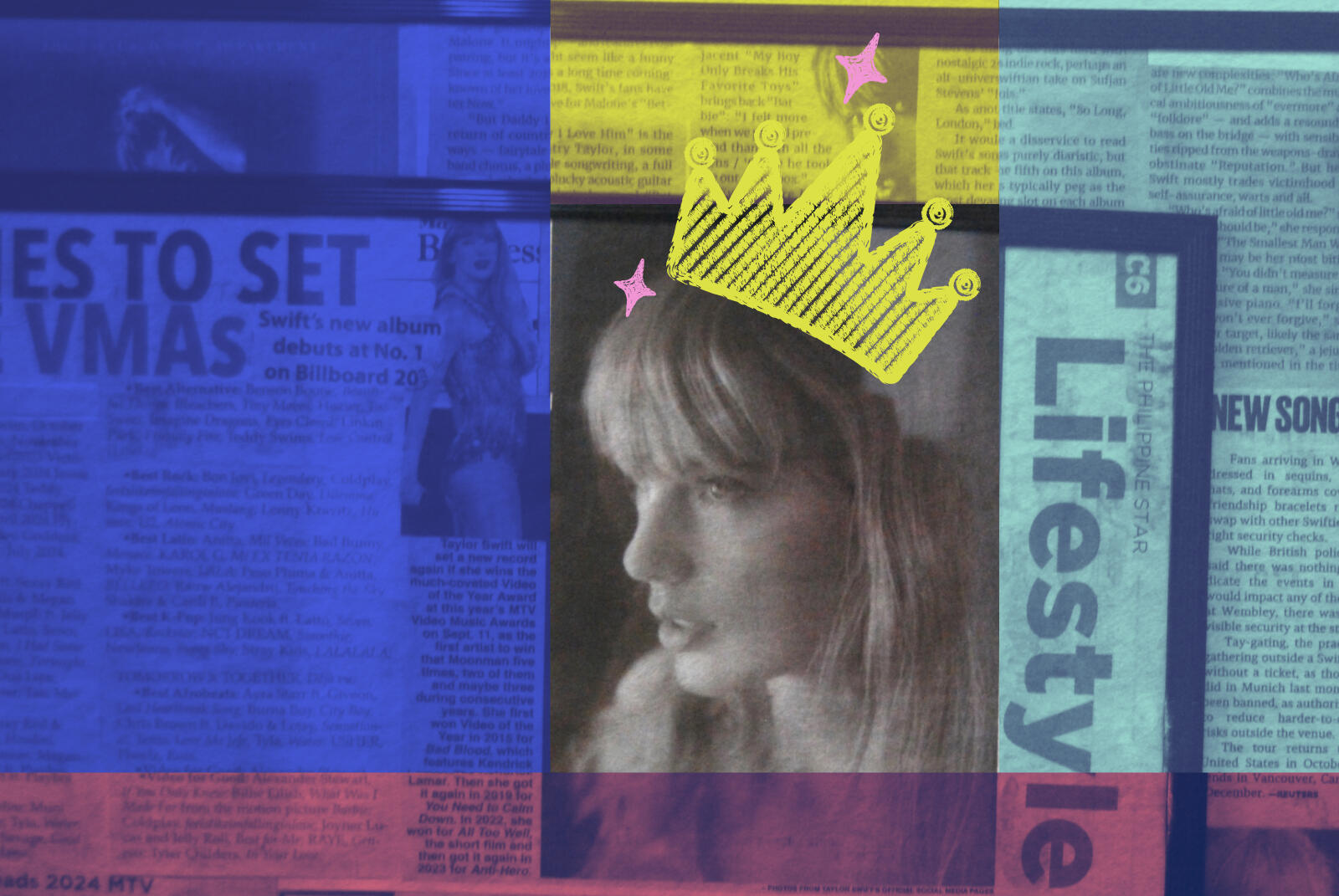

Among these unconventional classes, one appeared to be gleaming and twinkling in both topic and enlistment demand: BMAS 196 (Celebrity Studies), which took global pop icon Taylor Swift as its main focus.Though the ears of many will perk up whenever the pop star is heard on playlists, placing her career in a more technical university setting may instead raise eyebrows. While its instructor, Professor Cherish “Ma’am B” Brillon, acknowledged online users’ scrutiny towards the course’s relevance, she stood by its role in holistic growth.
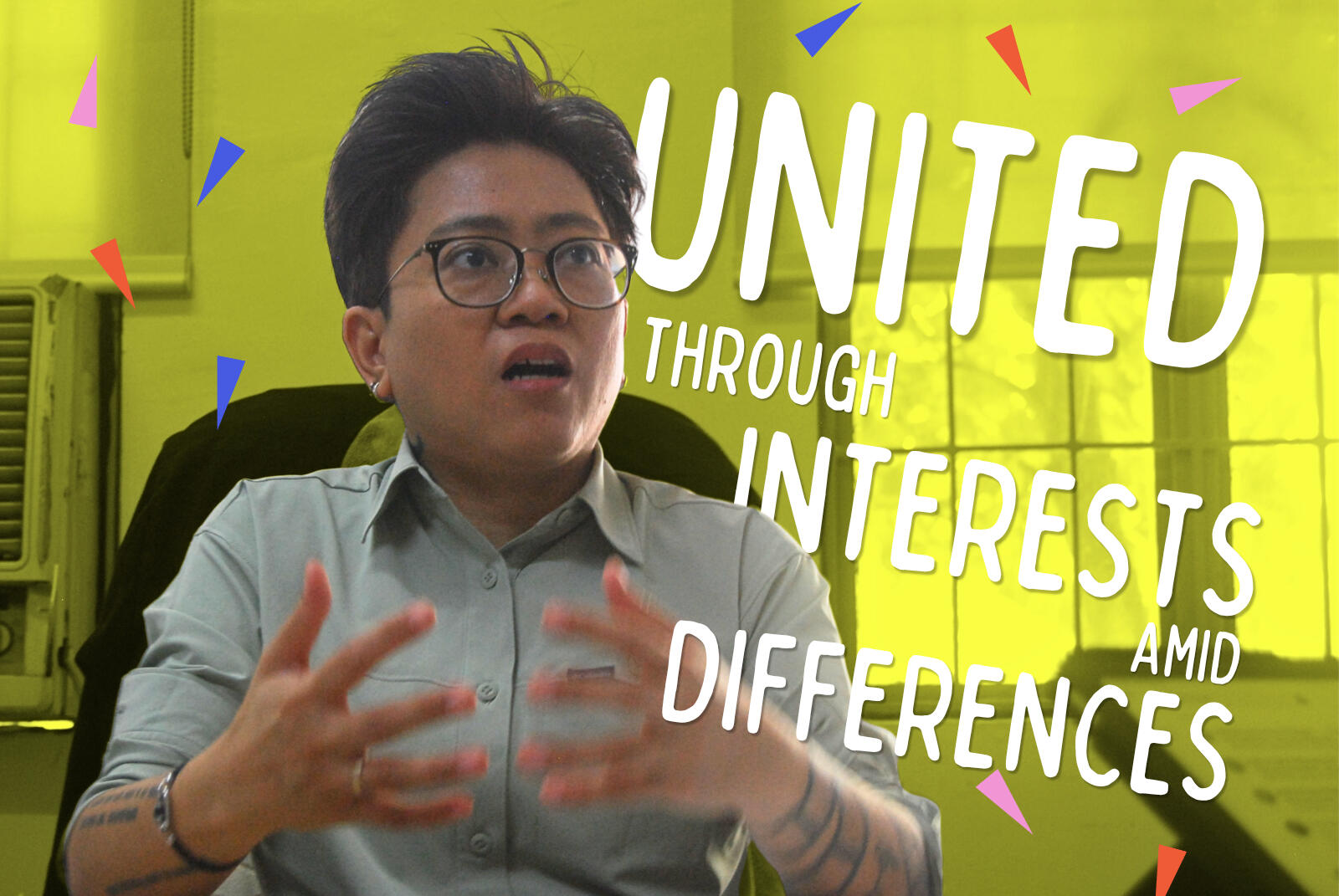
“There are courses na you offer in the university not because it will give you the job that you want, but [because] universities are really designed for the creation of a holistic human being,” she explained. “And [that includes] critical thinking, creativity, [and] breaking down things so that you understand them.”True enough, this College of Media and Communication (CMC) class looked at celebrities not merely as entertainment figures. Instead, celebrities were studied as people who shape and are shaped by politics and society.Taylor Swift, for instance, was studied as what Ma’am B described as a “product of a Western media industry”; the Philippines is discussed as one that elects celebrities into “institutional power.”Similar power dynamics are those that UP students know all too well once enlistment rolls around. Just as we watch over the demand of our desired classes like masterminds, the instructor observed that around three hundred students were waiting to enroll in her course during its pilot launch.With one schedule intended for Broadcast Media Arts and Studies (BMAS) students, another schedule for the course was eventually opened to students from other disciplines like Math, Economics, and Engineering.“Because they’re coming from various disciplines, [the discussions became livelier],” Ma’am B expressed.Ma’am B further commended the experience she was able to build with their students, remarking how active the class was throughout the semester.“Sobrang sipag nilang pumasok, so doon ko rin na-realize na I think if you’re able to take curiosity and the interest of the students, they will really come to the class, they would participate, and more than anything, they would really be happy attending the class.” Ma’am B recalled. “[They’re] not just thinking of it as something they would have to go through because it’s part of their curriculum.”Far from the competitiveness to which we have grown accustomed when enlisting and studying more technical topics, these BMAS 196 students approached the course with enthusiasm.“I think my students went into the course not really thinking about how it will benefit them when they graduate,” Ma’am B recalled, "Marami talaga sa kanila pumasok because it appeals to them.”This uncovers a desire among UP students for more transformative classes that will serve as breathers rather than burdens, where the world is a journey to claim rather than just a job market to contend with. However, looming concerns about resources and demand keep this desire at risk of staying just that.“More than the enlistment, [maybe the concern is] how the university can keep up with the demands of offering elective courses,” the BMAS 196 instructor asserted.She went on, “Ang laking problema nito pagdating sa resources, [paano] ba tayo mas makakapag-offer pa ng mas maraming elective courses na magke-cater sa isang interdisciplinary perspective?”Even her own course was met with a multiple-person demand that only materialized for some students across its two schedules. When institutions do open opportunities for us to pursue growth—and when that same opportunity emboldens us to keep fighting for more—we are left with lessons that linger. We may not be out of the woods just yet, but we start seeing beyond our degree programs and tapping into ideas that we never saw coming.
In a 2024 statement defending the course’s subject matter, Ma’am B wrote that part of UP’s purpose is to recognize that topics like Taylor Swift (seemingly “trivial to others”) may be “worth a closer, deeper examination”.With courses and instructors so fiercely unapologetic about the stories on the sidelines, we find the heart to start the trivial conversations on our own—and later on, to maybe even make it about us. Our quirks, rounded out and given color by the UP experience, become questions for reflection and refuse to be quieted.More than simply satisfying the fifteen to eighteen unit normal load requirement, it is through classes such as this iteration of BMAS 196 that the Iskolar ng Bayan looks a little differently at their surroundings—beyond what is merely required and beyond themselves, and through participation in nuanced and holistic discourse that allows them to navigate their world.When we gear up for another enlistment season, we no longer just think of class recommendations or performances for prerog. We think of the spaces that should be rightfully set aside for even the smallest of voices.
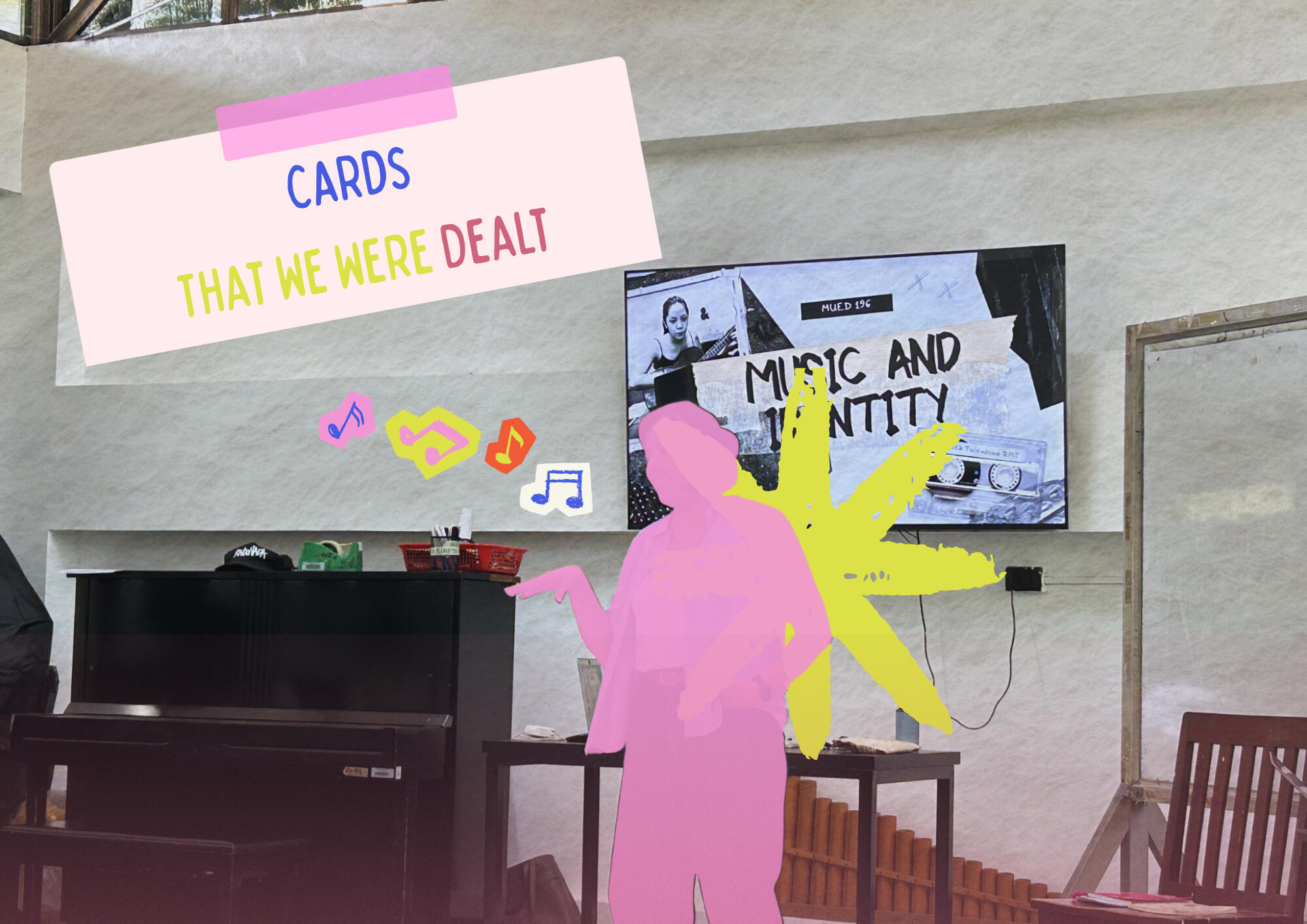
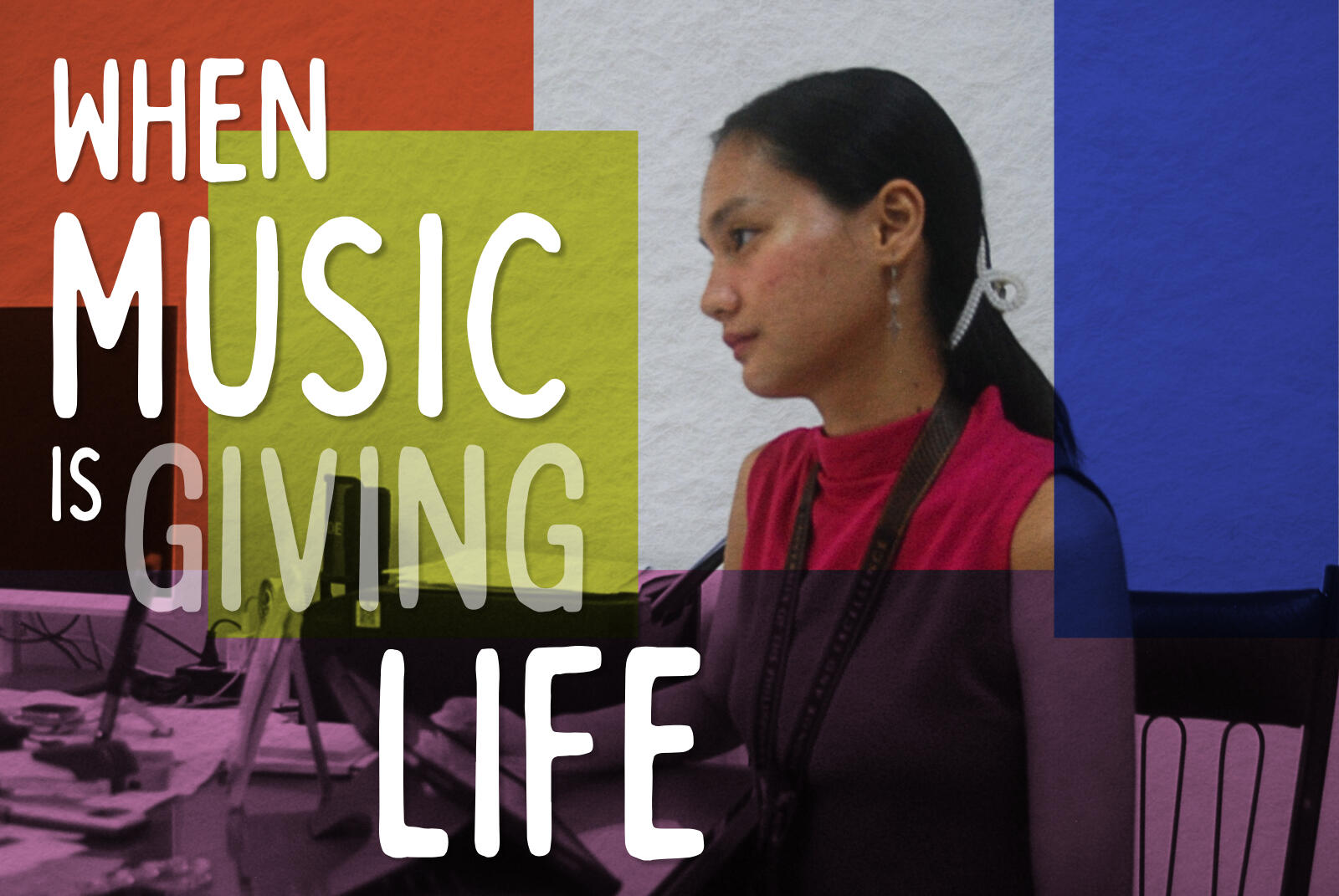
A few footsteps away and within the resonant corners of Abelardo Hall, the bylines that went on news articles found their way to journal entries and playlists.For second-year Journalism student Lance Gonzales, taking MuEd 196: Introduction to the Art and Science of Music Therapy was a lucky detour. Originally aiming to take a language elective that was left ungranted by the first CRS batch run, he had scoured through social media for suggestions on classes that he could take as an alternative.“The first time I saw MuEd 196 being suggested on social media posts, it really already piqued my interest kasi listening to music is one of my biggest passions,” he shared. “Ang cliche sabihin, pero I can’t spend a day without listening to music.”He concluded, “When I saw ‘yung Intro to Music Therapy, [I thought], “Oh, interesting ‘yung course title pa lang na ‘yun.”Another unsuccessful batch run and an email for prerog later, Lance was granted a slot in the class—a rollercoaster experience for a class described by its instructor Ms. Thea Tolentino as “experiential.”Building on the idea that music is an everyday aspect of life, Ma’am Thea said on MuEd 196, “Music is already part of how people navigate their lives. Students use it to cope, to feel, to make sense of things—but often without really examining that relationship. This class is a space to understand it more deeply.”As discussions abound, sometimes interspersed with musical snippets that the class sings along to in unison, students are reminded that they themselves are heard and their needs are deserving of being addressed. Students are reminded that they are real, in all their own unconventionalities.Coverage-wise, the instructor shared that the class learns about how music functions in “everyday life emotionally, socially, and physically” and supports “wellbeing, self-awareness, and relational connection.”From the first day of class alone, Lance recalled, he had already written pages upon pages about his thoughts on music inside the journal required by the class. It was a welcome break from the specificity and structure that characterize journalism, even as he acknowledged that his current degree program still allows some space for creativity.“Sa MuEd, you’re [much more free] in my opinion,” he asserted. “Iba ‘yung freedom that it gives you in terms of workload.”Just as Ma’am Thea responds to every student’s journal entry, she also shared her thoughts on the activity: “What’s stayed with me [throughout reading the journals] is how students begin to shift over time. They talk about feeling more able to sit with their emotions, rather than avoid them.” She continued, “Some describe allowing music back into their lives in a more intentional way, na hindi lang siya background noise, but as something that helps them move through what they’re feeling.”This thread of interconnectedness, first spun through class requirements, soon becomes woven into the class composition. With MuEd 196 notably offered to non-Music majors as an elective, the only prerequisite is a relationship with music.Even when coming from the neighboring Plaridel Hall just a few meters away, distance diminishes, and growth approaches when the people waiting at the destination bear no judging eyes. The journey that students take in MuEd 196 is as welcoming and familiar as an old tune from childhood, drawing on what is already rooted in them and softening what is expected of them elsewhere.“My journalism classes sharpen me, while MuEd allows me to slow down,” Lance described.For Ma’am Thea, she explained, “[At MuEd 196], we’re not aiming for something polished or perfect. The focus is really on expression and engagement.”Still, breathing room can grow constricted when society presses play on its pressures. In a time where education is marketed as an economic stepping-stone rather than a source of enrichment, intention is put at the forefront of MuEd 196—sometimes, before a slot in the class is even granted to a student.Though questioned about the practicality of enlisting in the course, Lance said, “I am someone who always [believes] na it’s better to choose something that you’re actually passionate about.”Amidst budget cuts and the consequent scarcity of classes offered in the university, a passion-driven college experience can feel like a pipe dream. Thankfully, it grows sharper and more realistic when acknowledged by the instructors themselves.Speaking on the helpful yet occasionally inequitable prerog practice, Ma’am Thea said, “Students who are more confident, more informed, or simply more available tend to benefit from prerog, while others can get left behind.”Anticipating class demand is key, the instructor said. “The goal would be to rely less on prerog altogether by making the formal system work better for more students from the start.”Sitting in on classes, stories of music and its magic—always grounded in the mundanity of everyday experiences—are exchanged comfortably. If not finishing the instructor’s sentences in giddy anticipation, students pitch in personal narratives that their seatmates nod along to in understanding.When classes end, only lectures stop; some stay behind to sit at the piano tucked to the classroom’s side, letting its joyful notes speak now that feelings have been sorted through. Melodies stream out into the corridor for even passersby to appreciate, amidst their own hustle and bustle of classwork.